A Trauma Therapist’s Journey to Animal Research Through Moral Injury

I've never actually stepped inside an animal lab.
It may be surprising, then, that I've found such a deep passion for this community and for both the human and non-human animals connected to it. But I think the way I arrived here says something important about how these things work, about how we are all connected, and about how what happens in one place, in one life, has a way of traveling further than we expect.
I came to this work through war.
I enlisted in the military at eighteen, just months after 9/11, and served for twelve years. Those years left marks I eventually had to stop and face, and that process of learning to name what I was experiencing drew me toward graduate study in counseling psychology and toward specializing in trauma. What I had been carrying had a name: PTSD. Coming to know it not just as a diagnosis I studied but as something I had lived inside taught me what it means to need the right name for an experience before you can find your way through it.
Later, in academia and clinical practice, I met burnout and compassion fatigue. During that time I became personally acquainted with that particular hollowness of giving beyond your resources and taking the suffering of others into that void. I came to understand the way prolonged exposure to hardship quietly erodes your capacity to feel, and then your capacity to function. Once again, I came to know these things from the inside, not just from the literature.
But it was what came next that brought me here to this community. What came next was moral injury. And it was animal care that taught me what moral injury really is.
Just a couple of years before I entered animal care work, I was completing my doctorate degree, and there came a point where I had to decide what I was going to study for my dissertation. This was no small decision considering that most people spend 1-2 years completing this major undertaking. I was a trauma therapist, a clinician that had studied values-based and existential modalities intentionally, and a military veteran, which is the population moral injury originated with. So the choice to study moral injury for my own research made as much sense as anything, even though I had never heard of it before, and didn’t really understand the depths of it at the time.
I spent over a year conducting my own research examining moral injury in military populations. I didn’t know if moral injury would stay relevant in my life following graduation, but I committed to immersing myself deeply in the topic. By the end of my study, I could explain its mechanisms, distinguish it from PTSD and burnout, and describe the conditions that produce it. I knew its name.
Then I began seeing it in my life. First, in my clients as I worked with an entire caseload of content moderators, individuals whose job it is to view all of the graphic content that gets uploaded to the internet from around the world, and who determine what can stay online versus what is too egregious for public view.
It was here that I observed something I couldn't fully explain at first. My clients were often more deeply troubled by animal-related content than by equally graphic content involving humans. This was anecdotal, not empirical, but it was enough that it stopped me and made me pay attention.
It's why I pursued Veterinary Social Work and began working with the human-animal bond specifically, because the evidence, anecdotal and clinical, kept pointing toward something particular happening at the intersection of human witnessing and animal suffering. There was something there that seemed to reach people at a depth that other exposures sometimes didn't.
Then I began volunteering in animal shelters, and I moved from knowing moral injury’s name to learning its face…and every aspect of its character. I came to have an intimate relationship with it. And as is true in all close relationships, it changed my sense of who I am, required me to navigate betrayals, and demanded a more honest examination of my values and identity.
What I encountered on the shelter floor was something my training had positioned me well for. When nobody else around me was identifying what was happening, I immediately saw how my doctoral studies were coming full circle in my life in new and unexpected ways. I could see how the suffering I and others were witnessing was not suffering alone, but suffering with a values violation attached.
These weren’t animals suffering from natural conditions, but rather from manmade harms and systems. I saw the betrayals, of leadership and of the public and of trusted others. I saw the perpetration. And I saw, too, the harm that was happening to the people inside these systems, who were being just as wounded as the animals entering them were. In all of these situations it was about the people just as much as the animals.
The animals who arrived broken and frightened had been shaped by decisions made in rooms I was never in, by systems that existed long before I showed up. I didn't create the conditions that produced them. But those conditions arrived with them anyway. I was affected, the people around me were affected, and we all became responsible for what came next.
This is what moral injury does that the other conditions don't, at least not in the same way. It has a social dimension. It doesn't live only in what happened to you directly; it lives in what happened between you and a system, between your values and what that system required, between who you believed yourself to be and what you were compelled or asked to do, to witness, to carry, or to participate in. It is produced at the intersection of the personal and the collective. It cannot be understood as only a private experience because it was never only privately produced.
I knew this intellectually. For me, the shelter floor made it real.
Because moral injury wasn't being talked about in the spaces where human wellbeing and animal welfare meet, and because my professional and personal experiences had convicted me so deeply of its importance, I chose to study it again.
The conditions I specialize in — PTSD, burnout, compassion fatigue, moral injury — are not interchangeable, even though they are often treated as though they are. They have different origins, different mechanisms, and they require different responses and it is the data that helps us distinguish between them. My goal was to give this topic life in data and improve our understanding of what makes moral injury unique.

I found Justify because of my research. As I was studying moral injury among animal care workers, I reached out to recruit participants for a study. But I stayed for so many reasons that extend beyond that initial research.
In this community, all of these types of wounds are present. PTSD. Burnout. Compassion Fatigue. Ruptures to the human-animal bond. Moral injury. Like the shelter floor, animal labs carry a cost we haven’t been talking about. But Justify was starting that conversation. And I’ve stayed because it’s a conversation worth having.
What Justify holds that most spaces don't is an honest accounting of the full cost: to the animals. To the people. To the science. It refuses to separate those things, because they aren't separate. The human cost and the animal cost inside those rooms are the same story told from two directions. The science we are willing to practice reveals something beyond what medical advancements we produce — it defines our humanity itself.
And I believe that holding these truths together, without flinching from what is uncomfortable, is where genuine understanding begins. It's also, I've come to believe, where healing begins.
And I believe the conversation is bigger than one about our science. I believe it's about our hearts, our souls, and our humanity. It's about our connection to other living beings, of every kind and species. We aren't just having a conversation about science — we are having a conversation about sentience. About the human-animal bond. About who feels and thinks and experiences, and about who we become when we treat others in ways that either honor or deny what lives inside them.
We don't yet have all the empirical answers for why harm involving animals seems to reach people at a particular depth or why it can wound us in ways that go beyond what standard trauma frameworks account for.
But the clinical and anecdotal evidence I've gathered across years of practice kept pointing toward something real happening at that intersection. Something rooted in the human-animal bond itself that we are still learning to understand. It is part of why I didn't stop at specializing in trauma or moral injury alone; it's why the human-animal bond became central to everything I do.
I think about this often in relation to the people in this community. Not only are many of you carrying moral injury, you may be carrying it in a context that activated something even more primal in you than you've been given language for. It is a reason to take what you carry even more seriously than you may have been told to. It’s a reason to start talking about what you’re carrying. Because an injury that is social and systemic in nature requires healing of the same kind. This is a conversation we need to have together.

And it's a conversation primed for animal labs. And shelter floors. And abattoirs. And wildlife exhibits. And all the places where human and non-human animals interact, all the places where we decide, whether we name it as a decision or not, how we will interact with life around us and who and what we are willing to see and value.
I've never stepped inside an animal lab. But I am here. Because we are connected by the values we choose to live, by the life we recognize in one another, and by the reality that what happens in one place, in one life, has a way of traveling further than we expect.
And the healing that happens when we face those realities with honesty, when we bear witness, when we name what we see and refuse to look away, that travels too.
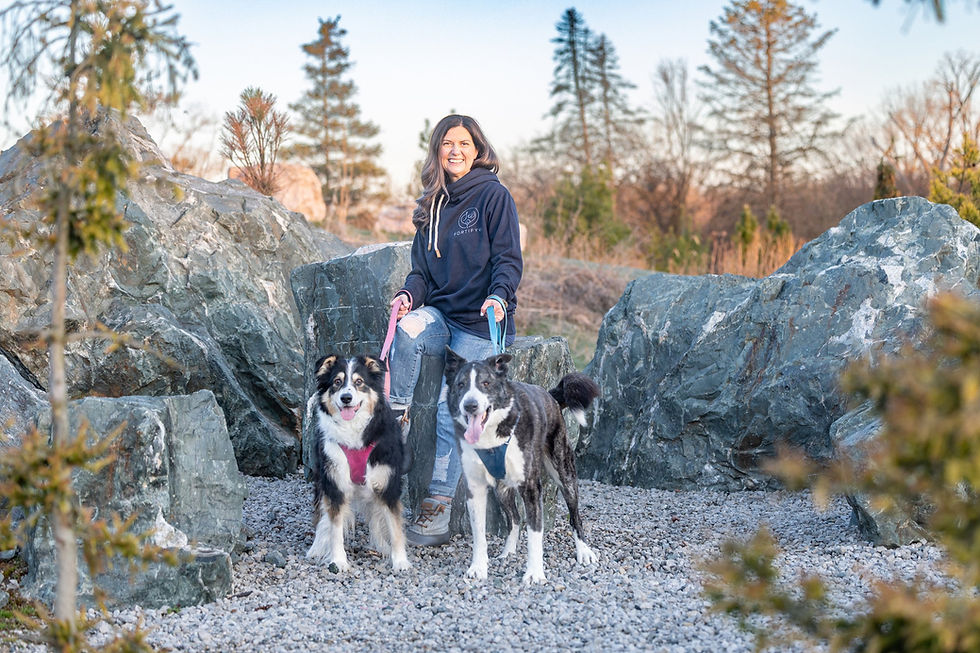
Jamie McNally, PhD, LPC, VSW/VMHP is a trauma specialist, moral injury researcher, Veterinary Social Work/Veterinary Mental Health Professional, and founder of Fortifyu Consulting. fortifyucoaching.com