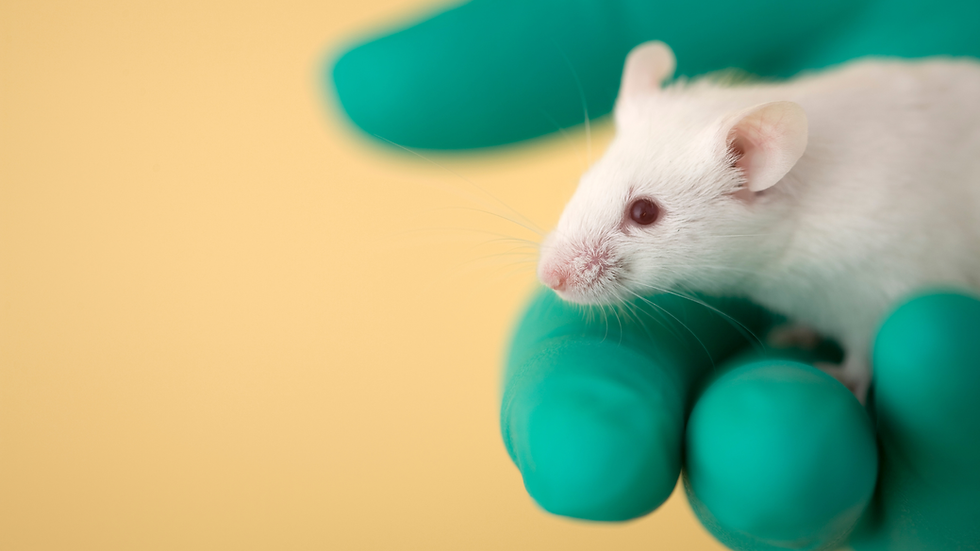
Left With PTSD: The Cost of Caring for Lab Animals
![Writer: Morgan [Guest Writer]](https://static.wixstatic.com/media/5c7114_b0d6b6af9b714e13ade91e54c8bc8bf0%7Emv2.png/v1/fill/w_32,h_32,al_c,q_85,enc_avif,quality_auto/5c7114_b0d6b6af9b714e13ade91e54c8bc8bf0%7Emv2.png)
I have always loved animals; my interest was piqued by the age of two and I never considered any other career field. By my mid-twenties I had graduated with a degree in Animal Science and had worked with a variety of domestic, wild, and exotic animal species. Keeping a job in the animal field is difficult, the pay is low, hours are horrible, there are toxic workplace environments, and the job prospects are very competitive. I had jumped around doing different jobs/internships, without getting anything permanent after graduation.
Desperate to find a full-time job with benefits before the age of 26 [parent’s health insurance coverage ends], I applied for anything involving animals. When I got the job as lab animal care technician, I had no idea what it really entailed. The interview was vague about job duties and without the ability to see the facility [couldn’t go in animal areas without security clearance], they downplayed what it would be like. I was young and not well equipped to identify red-flag jobs.
I started as a non-human primate animal care tech working with macaques. The first thing I remember is being shocked at how small of a space they lived in. These cages were all metal, and only 6.0 ft² or 4.3 ft² of floor space. Most monkeys would be given access to only one or two of the sections in the 2x2 unit of 4 cages, sometimes they would be paired with another monkey [if the study they were a part of allowed it].
I started with 18 monkeys as part of my training. They were young sweet female macaques, it was easy to form attachments, even though we were told not to. They were excited to see me when I entered the room, took treats from my hands, and would even pretend to groom my PPE covered arm.
I worked at this facility for approximately four years, and over time, one by one, each monkey was pulled to go on different STI studies, to be infected and then euthanized.
As an animal care tech, we were not privy to the details of why the study was being done and for what purpose.
By the time I left, there was only one remaining monkey from this group, her original partner was already gone, she wasn’t paired with another monkey, and confined to one 6.0 ft² cube.
I took her handprint before I left, to remember her by (pictured below). I have no idea what happened to her.

Over the course of four years I held a few positions, constantly moved around the facility based on needs, at times doing the work of 2 or 3 different jobs, underpaid of course. I worked with the small animals [mice, rats, hamsters, guinea pigs, rabbits, ferrets].
The rodent housing was completely inadequate, preventing their natural instincts to burrow, and confining them to small plastic boxes, hard cages, and sometimes improper social groups. The boxes were lined with a thin layer of corn cob, and the rodents were given a little bit of cotton for bedding.

Ferrets were paired and housed in a small 3 ft² metal box. The cages were unsuitable for ferret behavior and physiological needs and were faulty: often coming open by accident [ferrets escaping], watering systems breaking, and the smell was horrible. The cages were stacked 4x2 in a rack and multiple racks in each room.
The rabbits were solo housed in a small cage with a plastic floor that had holes for feces to drop through. The worst part was the watering system. Rabbits prefer to drink from a bowl [like a cat or dog], but similar to the rodents, they were given water bottles or used the Lixit system that was at an awkward position and difficult for them to drink from. There's no way they drank the appropriate amount of water daily. The cages came three stacked on each other. The guinea pigs were housed in similar sized caging.

I injured myself while working. The workers comp situation was horrible; the doctors I was forced to see didn’t believe my pain and didn’t even properly diagnose me until weeks after the incident. I’m not sure why I didn’t quit then, unfortunately Covid-19 made it very hard to search for a new job. I felt like I didn’t have a way out. There were other workplace incidents, including animal attacks and exposures to deadly diseases.
I had horrible insomnia and anxiety. Later I was diagnosed with PTSD from my experiences.
The animal care techs cared deeply for the animals, it was distressing to have them taken away to other areas for the different experiments, or be euthanized. There were often times when we were asked to euthanize mice ourselves. It’s not a pleasant process. Most lab facilities probably have a similar method.
First, the mice are placed in a clean empty plastic box and then a special lid is placed over it that allows CO2 to enter, the mice slowly fall asleep and then asphyxiate. The AVMA guidelines state there must be a secondary method used to ensure death, usually cervical dislocation.
Larger animals typically needed a veterinarian to sedate and give an overdose of barbiturates. If a necropsy wasn’t needed, you bagged them up and placed the body in a deep freezer. It was odd, to have a relationship with this animal, watch it get killed and then disposed of like garbage.
In the interview for the job they ask you if you are okay with euthanasia. In my experiences I had before this job I didn’t see it as a bad thing, usually it was necessary to end the suffering of an animal and there were no other options. So of course I was okay with it. What they should have asked: “Are you okay with killing animals?”
In the lab, euthanasia is performed on perfectly healthy animals at the end of a study for a variety of reasons including: because they are no longer needed; because they need to perform a necropsy to collect tissue; to use the animals’ bodies for training lab workers on how to handle animals and learn procedures; for vets to learn complicated surgical techniques-classifying it as terminal surgery, etc.
The work culture could be toxic and animal care techs were on the bottom of the food chain. The bosses, whether it was the program managers or direct supervisors, usually had poor communication skills, played favorites, gossiped about other employees, and were generally difficult to work with.
We had annual performance reviews; the evaluations were harsh and often overly critical. Some of my co-workers cried from what they were told. As a neurodivergent individual, my performance review often came with ableist comments about my behavior that had nothing to do with my job performance caring for the animals. Animal care techs often were blamed for things out of their control when it came to the animals’ health or husbandry care.
The animals had to be cared for on the weekends and holidays, but instead of having a full working shift, it was a skeleton crew with 1-2 people working in each area. It was pretty much impossible to keep with the regular schedule the animals would usually have during the work week. This led to unfortunate things happening on the weekends because whomever was working would be very stressed and had a lot of things to remember to do.

One time I came in and found a monkey dead in her cage. She had been at this facility for a long time and was a couple decades old. She died from complications of a disease that had nothing to do with any research study, she and her roommates had been sitting around for a while…just there. Her poor condition should have been caught sooner, and she should have been euthanized to end her suffering.
Even though her disease was known to the vet staff, and animal care techs did report her condition, nothing was done. Instead after the necropsy, the vet staff and upper management, probably looking for someone to blame, decided that the animal care techs and vet techs should have done more to alert them and advocate for her well-being. But even then, there were times when I caught the onset of a problem for an animal and reported it promptly, but the vet staff, either due to lack of experience or restrictions implemented by the research studies, did not provide quick and effective treatment, so yet again the animals suffered.
When the animal care techs did advocate for enrichment better suited for the different species, novel food items, more appropriate housing situations, we were often met with: “the facility won’t pay for that,” “no one actually cares enough to implement change,” and “those are great ideas, but they won’t get approved.”
So many of the animals lived in enclosures ill-suited for their basic biological needs. This would cause stress. We gave them enrichment, but the items were subpar, and usually ignored by the animals.
How could anyone conduct good research on animals that were stressed and not having their needs met? You would think that to have a good model, the animal should be in a low-stress environment, have plenty of space to exhibit appropriate behavior, be free from fear, and have all their needs met. Certainly, that would have a better outcome for the data needed in these studies. However, due to many factors [cost, space, ease of access, type of research], the animals were treated as objects instead of individual living things.
Despite all of that, the animal care techs treated the animals as if they were their own pets. We named them, played with the rats-they love being tickled, sat in the rabbit rooms and held them, sang Disney songs while we cleaned their enclosures, made special treats, and in some rare cases were able to adopt animals.
During the training process for the job, indoctrination techniques are used to brainwash you into believing that the end justifies the means. Slogans like “Animal Research Saves Lives,” “Technicians are the gears that move research forward,” “Love Animals? Support Animal Research” on posters.
“It’s the animals you don’t see that really helped her recover” on a poster of a little girl that supposedly was sick. “Thanks to animal research they’ll be able to protest 23.5 years longer” on a poster with a picture of animal rights protesters holding signs.
That combined with saying animal research saves other animals’ lives too, as if the trade off for the lives of animals born into the lab breeding industry mean less than that of your pet.
Public outreach events are held by some facilities in an attempt to bring "awareness" about research to put forward the illusion that the scientific community is being transparent about what really happens behind the scenes. But the picture they paint isn’t reality.
On social media posts, when new information comes out about how lab animals are being treated, you often see keyboard warriors saying: “How could anyone treat animals this way? They aren’t human.” “Those people are evil.” “They aren’t human. They’re demons [or monsters].”
But all the people I have worked with weren’t evil…or demons…or monsters, they were just humans.
People with flaws. People who are in over their heads. People told “this is the only way it can be done.” People who disagree with the methods being used. People that want a better life for the lab animals. People that have never been given another option. People who are actively making the animals lives better. People who don’t actually want to do this job. People who have to because their degree demands it. The list could go on, but there is a human on the other side, and they are suffering too.
There were many moments throughout my time at this facility that I would question myself on why I was there, internally I disagreed with all of it, but I needed a job and I felt stuck. I also cared deeply for the animals, and was worried if I wasn't there they would not get the same level of care. The job took a major toll on me emotionally, most days I would dissociate [a symptom of PTSD].
Animal research doesn’t save the lives of the animals it's being conducted on, and for what price? Your own moral code, your self-esteem and animal-loving identity? The animals and the humans that care for them deserve better.
By Morgan
[Name changed to protect the author’s privacy.]